Health vs. Wellbeing
Health vs. Wellbeing
Exploring the Wellness Wheel
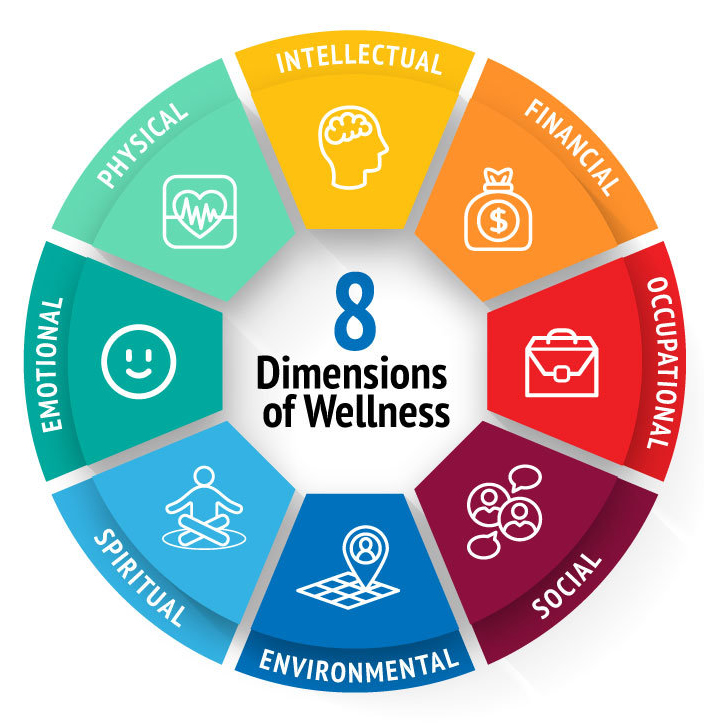
The Wellness Wheel is a powerful tool to help us narrow in our focus and support our health through intentional and strategic goals. But first – what is the difference between health and wellbeing, and why does it matter?
Health generally represents the physical state of our body.
We can look at nutrition and movement closely here and see how it affects our health physically.
Wellbeing, on the other hand, is the big picture of several factors that impact our overall health or wellness. These factors include: social, emotional, spiritual, intellectual, physical, environmental, occupational, and financial.
Wellbeing tends to be more unique and subjective to you and your philosophies, thoughts, and values. The idea of wellbeing can also take a more comprehensive approach, and enforces the idea of interconnectedness in our physical, emotional, and mental health. Understanding these differences empowers us to cultivate holistic wellbeing aligned with our unique values and beliefs.
This wellness wheel can help us assess and visualize the aspects of a person’s overall well being more closely. It typically divides wellbeing into different areas or components, each representing a different aspect of life that contributes to overall health and happiness.
Now – let’s take a look at the Wellness Wheel and how our nutrition decisions affect each area!

Physical: Nutrition directly impacts physical health. A balanced diet with adequate nutrients supports day-to-day needs, energy levels, and overall physical wellbeing. It helps maintain a healthy weight, reduces the risk of chronic diseases, and supports optimal overall function.

Emotional: Nutrition can influence mood and emotional wellbeing. Certain nutrients, such as omega-3 fatty acids and vitamin-D, may be linked to improved mood and mental health. Poor nutrition, on the other hand, may contribute to mood swings, irritability, and even depression-like symptoms.

Social: Eating habits and food choices can even have social implications. Sharing meals with others can help cultivate social connections and strengthen relationships, contributing to social wellbeing. Additionally, cultural practices and traditions related to food play a strong role in the social aspect of wellbeing.

Intellectual: Proper nutrition supports cognitive function and brain health. Nutrients like antioxidants, vitamins, and minerals are essential for optimal brain function, concentration, and memory. Good nutrition can also support the energy required for lifelong learning and intellectual challenges.

Environmental: Nutrition choices can have environmental impacts. Sustainable food choices, such as consuming locally grown produce or choosing responsibly produced meat and products, contribute to environmental wellbeing by conserving resources and working to reduce factors that negatively impact the environment.

Occupational: Occupational wellness thrives on nutrition as a foundation for sustained energy, cognitive sharpness, and mental resilience at work. A balanced diet not only fuels productivity and creativity but also supports long-term health, fostering a positive work environment and effective work-life balance.

Financial: Nutrition impacts financial wellness by influencing healthcare costs, productivity, and budget management. By prioritizing nutritious choices, individuals can potentially reduce medical expenses, enhance productivity, and manage food costs effectively, thus contributing to long-term financial stability and wellbeing.
 Spiritual: Nutrition can influence spiritual health by supporting clarity of mind, physical vitality, and emotional balance, all of which are foundational to spiritual practices such as meditation, mindfulness, and self-reflection. A diet rich in whole foods and balanced nutrients can enhance overall wellbeing, fostering a deeper connection to oneself and others, and promoting harmony between mind, body, and spirit.
By paying attention to nutrition and making informed dietary choices, people can enhance their overall quality of life across various dimensions of wellness.